Tesla Optimus: The Mass-Market Humanoid Robot Revolutionizing Industry
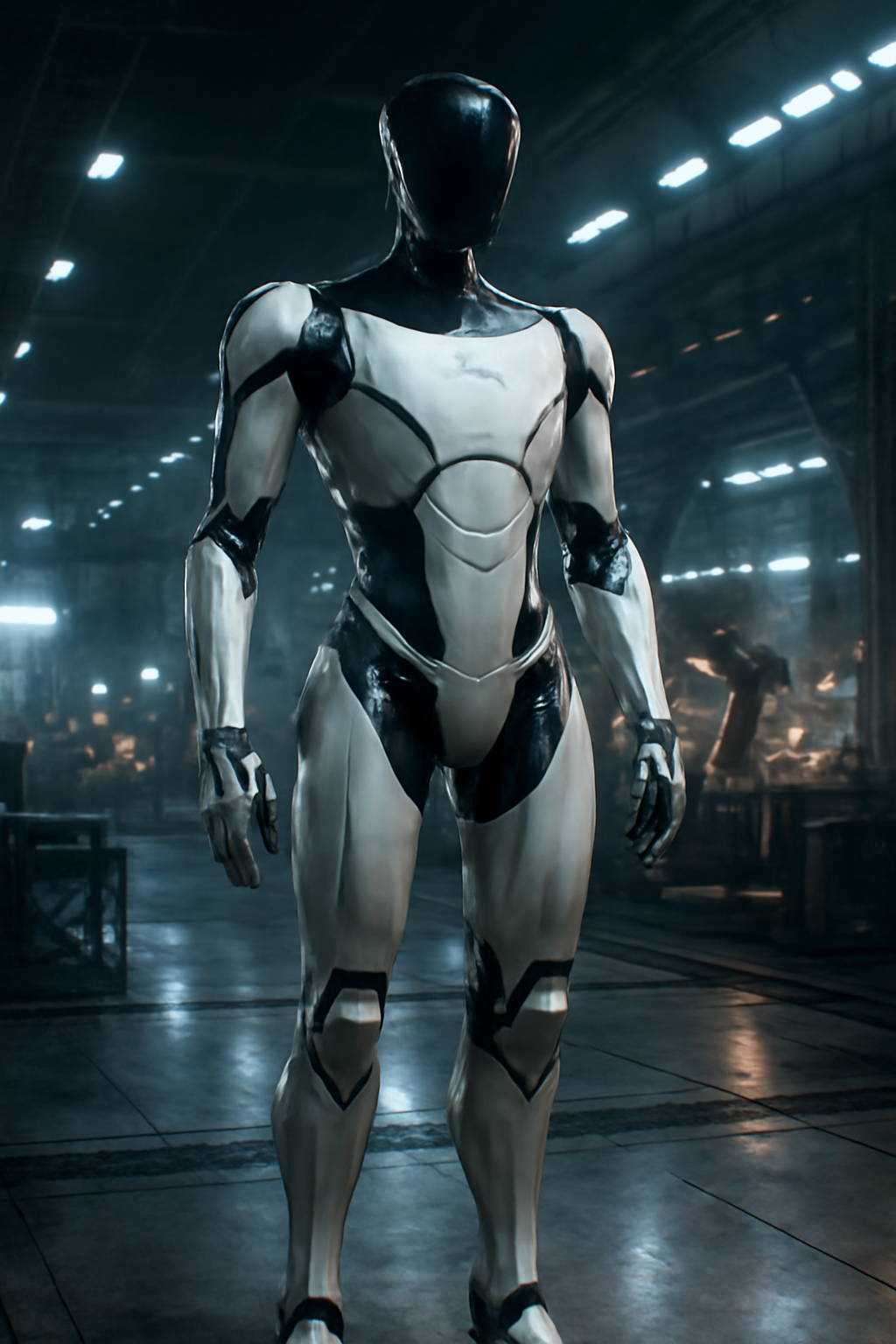
The world of robotics is witnessing a paradigm shift with Tesla's ambitious entry into humanoid robotics. The Tesla Optimus, also known as Tesla Bot, represents Elon Musk's vision of bringing advanced robotics to the masses through the same manufacturing excellence that revolutionized electric vehicles. Standing at the forefront of the humanoid robot revolution, Optimus promises to transform how we approach automation in both industrial and domestic settings.
Tesla's foray into humanoid robotics leverages decades of expertise in autonomous systems, electric vehicle manufacturing, and artificial intelligence. The Optimus project, first announced at Tesla's AI Day in August 2021, aims to create a general-purpose humanoid robot capable of performing tasks that are dangerous, repetitive, or boring for humans. This ambitious undertaking represents Tesla's broader mission to accelerate the world's transition to sustainable energy and automation.
Company Background: Tesla's Robotics Evolution
Tesla Inc., founded in 2003 by Martin Eberhard and Marc Tarpenning, gained worldwide recognition under Elon Musk's leadership as the company that made electric vehicles mainstream. Beyond automotive manufacturing, Tesla has consistently pushed the boundaries of artificial intelligence, particularly through its Full Self-Driving (FSD) technology and neural network development.
The company's expertise in autonomous systems, advanced manufacturing techniques, and battery technology creates a unique foundation for humanoid robotics development. Tesla's Gigafactory approach to manufacturing has demonstrated the company's ability to scale production while reducing costs, a capability that could prove crucial for making humanoid robots economically viable for widespread adoption.
Elon Musk, Tesla's CEO and product architect, has positioned the Optimus project as potentially more significant than Tesla's automotive business. The company's team of engineers and AI researchers, led by Director of AI Andrej Karpathy (formerly) and Milan Kovac, brings together expertise in computer vision, neural networks, and robotics engineering.
Technical Specifications: Engineering Excellence
Physical Characteristics
The Tesla Optimus stands approximately 173 cm (5'8") tall and weighs 57 kilograms, making it comparable in size to an average human adult. This anthropomorphic design enables the robot to navigate spaces designed for humans without requiring infrastructure modifications. The robot's lightweight construction utilizes advanced materials similar to those employed in Tesla's vehicle manufacturing, ensuring durability while maintaining agility.
The robot features 40+ degrees of freedom, providing human-like mobility and dexterity. Its hands are designed with precision grip capabilities, enabling manipulation of objects ranging from delicate electronics to heavy industrial components. The bipedal locomotion system allows for walking speeds up to 2.2 meters per second, with dynamic balance control that enables navigation across various terrains and obstacles.
Power and Performance Systems
Tesla Optimus is powered by a 2.3 kWh battery pack similar to those used in Tesla vehicles, providing an claimed operational time of 20 hours under typical usage conditions. The robot can carry payloads up to 20 kilograms and lift objects weighing up to 68 kilograms, making it suitable for a wide range of industrial and domestic applications.
The power management system incorporates Tesla's advanced battery technology, including thermal management and fast-charging capabilities. The robot can recharge using standard electrical outlets, with full recharge times estimated at approximately 8 hours using conventional charging methods.
AI and Software Integration
Perhaps the most impressive aspect of Tesla Optimus is its integration with Tesla's Full Self-Driving (FSD) computer technology. The robot utilizes a customized version of Tesla's neural network architecture, adapted specifically for bipedal navigation and object manipulation. This system processes input from multiple cameras and sensors to create real-time environmental maps and execute complex tasks autonomously.
The robot features eight cameras strategically positioned throughout its body, providing 360-degree environmental awareness. These cameras work in conjunction with ultrasonic sensors and inertial measurement units to enable precise navigation and object interaction. The onboard computer processes this sensory data using Tesla's custom AI chips, enabling real-time decision-making and adaptive behavior.
Key Features and Capabilities: Human-Like Versatility
Tesla Optimus is designed to perform a wide range of tasks that mirror human capabilities. In industrial settings, the robot can handle repetitive manufacturing tasks such as assembly line operations, quality control inspections, and material handling. Its precision grip and visual recognition systems enable it to work with small components while maintaining the strength necessary for heavier industrial applications.
The robot's autonomous navigation capabilities allow it to move freely through complex environments, avoiding obstacles and adapting to changing conditions. Unlike traditional industrial robots that require fixed mounting and predetermined paths, Optimus can relocate itself as needed and adapt to new tasks through software updates.
In domestic applications, Tesla envisions Optimus performing household chores such as cleaning, organizing, and basic maintenance tasks. The robot's human-like form factor enables it to use standard household tools and appliances without requiring specialized interfaces or modifications to the home environment.
One of the most significant capabilities of Tesla Optimus is its potential for continuous learning and improvement. Through Tesla's over-the-air update system, the robot can receive new capabilities and improvements remotely, similar to how Tesla vehicles receive software updates. This approach ensures that the robot's capabilities can expand over time without requiring hardware modifications.
Pricing and Availability: Mass Market Ambitions
Tesla has positioned Optimus as a mass-market robotics solution, with projected pricing between $15,000 and $30,000 upon commercial release. This pricing strategy represents a significant departure from traditional industrial robots, which typically cost hundreds of thousands of dollars and require specialized installation and programming.
The company has indicated that initial production will focus on Tesla's own manufacturing facilities, where Optimus will be deployed to perform various assembly and quality control tasks. This internal deployment strategy serves multiple purposes: it provides real-world testing environments, generates operational data for improvement, and demonstrates commercial viability to potential customers.
Commercial availability for external customers is projected for 2025-2026, though Tesla's history with ambitious timelines suggests this may be optimistic. The company plans to utilize its Gigafactory manufacturing approach to achieve the scale necessary for mass production and cost reduction.
Tesla has also explored leasing options for commercial customers, potentially offering Optimus as a service with monthly fees that include maintenance, software updates, and support services. This approach could make the technology accessible to smaller businesses and organizations that cannot afford large upfront investments.
Pros and Cons Analysis: Realistic Assessment
Advantages
- Leveraged Technology Expertise: Tesla's proven track record in autonomous systems, battery technology, and mass manufacturing provides a strong foundation.
- Scalable Manufacturing: The Gigafactory approach could enable unprecedented production scales, driving down costs.
- Continuous Improvement: Over-the-air updates allow for capability expansion without physical modifications.
- Integrated Ecosystem: Potential for synergy with Tesla's other products.
- Cost-Effective Positioning: Aims to make advanced robotics accessible to a wider market.
Disadvantages
- Development Timeline Uncertainty: Tesla's timelines can be optimistic.
- Unproven Real-World Performance: Limited testing in diverse, real-world environments.
- Safety and Liability Concerns: Deploying autonomous robots in uncontrolled spaces raises significant questions.
- Competition from Specialized Solutions: May be outperformed by robots designed for specific, niche tasks.
Real-World Applications and Future Deployments
Tesla has begun implementing Optimus robots within its own manufacturing facilities, providing valuable real-world testing environments. These deployments focus on repetitive tasks such as moving materials, sorting components, and performing quality control inspections. The data gathered from these operations will inform improvements and validate commercial viability.
The company has identified several key application areas for Optimus beyond its own facilities. In manufacturing, the robot could handle dangerous or repetitive tasks such as working with hazardous materials, performing precision assembly, or operating in environments unsuitable for human workers. The automotive industry, in particular, presents significant opportunities for humanoid robots in painting, welding, and assembly operations.
Logistics and warehousing represent another major application area, where Optimus could handle package sorting, inventory management, and order fulfillment tasks. The robot's ability to navigate complex warehouse environments and manipulate various package sizes and shapes makes it suitable for e-commerce and distribution applications.
In domestic settings, Tesla envisions Optimus performing household tasks such as cleaning, organizing, basic maintenance, and eldercare assistance. The aging population in developed countries creates growing demand for robotic assistance, potentially representing a massive market opportunity.
Market Position and Competitive Landscape
Tesla Optimus enters a competitive but nascent humanoid robotics market. Key competitors include Boston Dynamics with their Atlas robot, Honda's ASIMO (now discontinued), and emerging companies like Figure AI and Agility Robotics. However, Tesla's unique positioning focuses on mass-market accessibility rather than specialized high-performance applications.
The company's automotive background provides advantages in manufacturing scale and cost control that traditional robotics companies lack. Tesla's experience with consumer product development and support systems also differentiates it from industrial robotics manufacturers who typically sell to specialized integrators.
Tesla's brand recognition and consumer trust, built through its electric vehicle success, provides significant marketing advantages for consumer robotics applications. The company's direct sales model and service network could support robotics deployment more effectively than traditional distribution channels.
Future Outlook and Development Roadmap
Tesla's roadmap for Optimus includes continuous capability expansion through software updates and hardware iterations. The company plans to improve the robot's dexterity, processing power, and battery life through successive generations while reducing manufacturing costs through scale and process optimization.
Long-term visions for Optimus include integration with Tesla's broader ecosystem of sustainable energy products, potentially creating autonomous systems for manufacturing, agriculture, and infrastructure maintenance. Musk has suggested that humanoid robots could eventually represent a larger market than Tesla's automotive business.
The development of Optimus also supports Tesla's broader artificial intelligence initiatives, with learnings from robotics applications potentially benefiting autonomous vehicle development and other AI applications. This cross-pollination of technologies could accelerate progress across Tesla's entire product portfolio.
Technical Challenges and Solutions
The development of Tesla Optimus faces significant technical challenges that the company is addressing through innovative approaches. Balance and locomotion represent fundamental challenges for bipedal robots, requiring sophisticated control systems and real-time adaptation to changing conditions. Tesla's approach leverages neural networks trained on vast datasets of human movement and environmental interactions.
Manipulation and dexterity present another major challenge, as human hands represent one of the most complex mechanical systems in nature. Tesla's approach combines advanced actuators with machine learning algorithms that can adapt to different objects and tasks through experience and training.
Power management remains a critical challenge for mobile robots, as they must balance performance capabilities with operational duration. Tesla's battery expertise and power management systems provide advantages in addressing these challenges, though the claimed 20-hour operational time represents a significant engineering achievement if realized.
Conclusion: Pioneering the Robot Revolution
Tesla Optimus represents a bold vision for the future of humanoid robotics, combining Tesla's proven expertise in autonomous systems, manufacturing, and artificial intelligence. While significant challenges remain in bringing this vision to commercial reality, Tesla's track record of disrupting established industries suggests that Optimus could indeed revolutionize how we think about automation and robotics.
The robot's potential impact extends far beyond industrial applications, potentially transforming domestic life, healthcare, and service industries. However, success will depend on Tesla's ability to deliver on ambitious technical promises while navigating complex regulatory, safety, and social challenges associated with widespread robot deployment.
For businesses and consumers considering humanoid robotics solutions, Tesla Optimus offers the promise of accessible, versatile automation technology backed by a company with proven capabilities in scaling advanced technology. While the technology remains in development, the potential benefits justify careful monitoring of Tesla's progress and consideration for future deployment strategies.
The Tesla Optimus project represents more than just another robotics development; it embodies the potential for humanoid robots to become as commonplace and transformative as personal computers or smartphones. Whether Tesla can deliver on this ambitious vision remains to be seen, but the company's approach to humanoid robotics has already influenced the entire industry and accelerated development timelines across competitors.